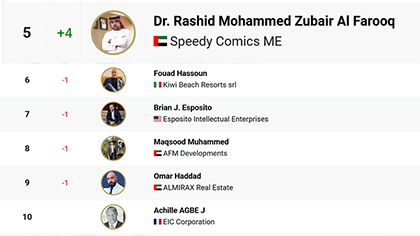

































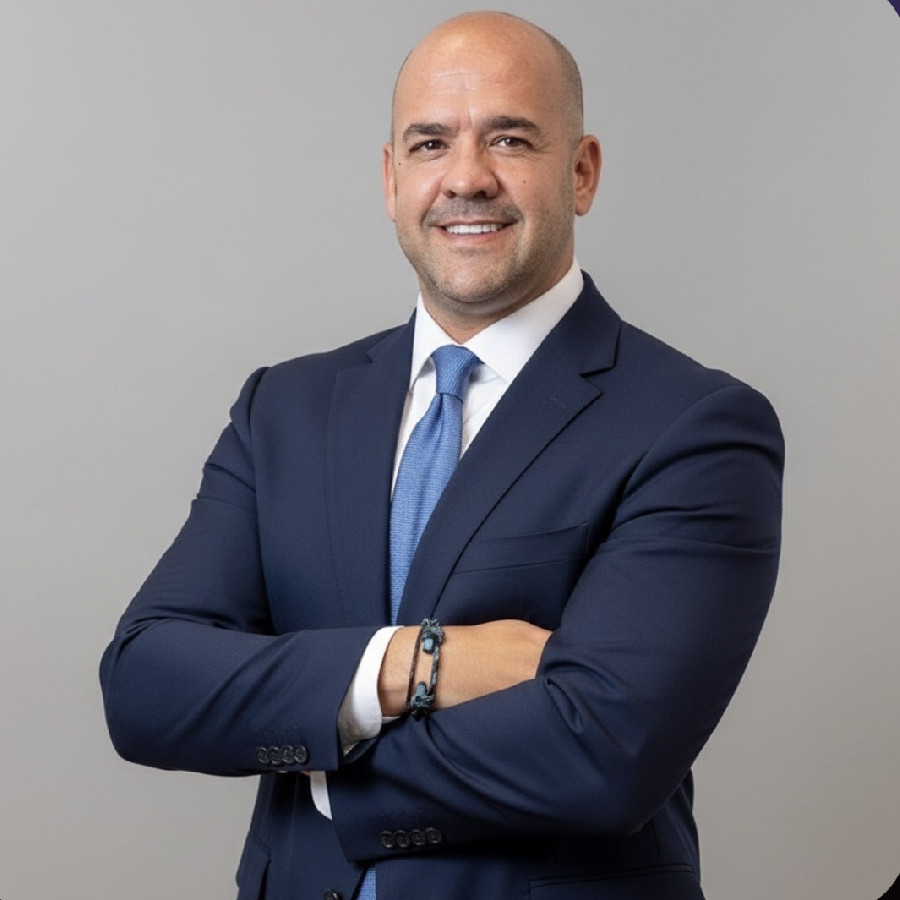








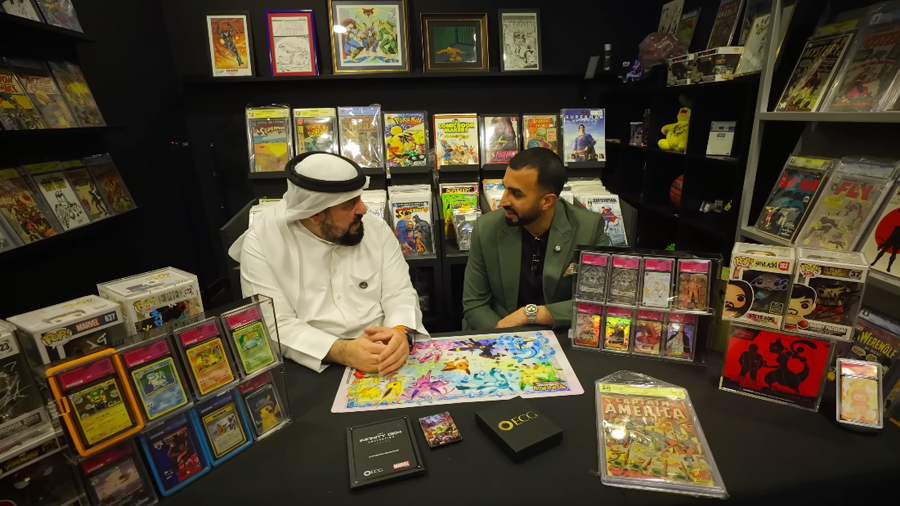
In an exclusive interview, Dr. Rashid Mohammed Zubair Al Farooq, CEO of Speedy Comics ME, revealed the contents of his $33 million comic book vault and shared the investment philosophy behind his extraordinary collection.
The Holy Grails Collection
Al Farooq's vault houses what collectors call "holy grails"—first-appearance comics that launched entire franchises. His crown jewel includes three copies of Action Comics #1, Superman's 1939 debut, with premium copies selling for $5.3 million.
"This comic started at 10 cents in 1939," Al Farooq explains. "A better copy than mine sold for $5.3 million. These books are limited because many were burned, thrown away, or sent to troops during World War II."
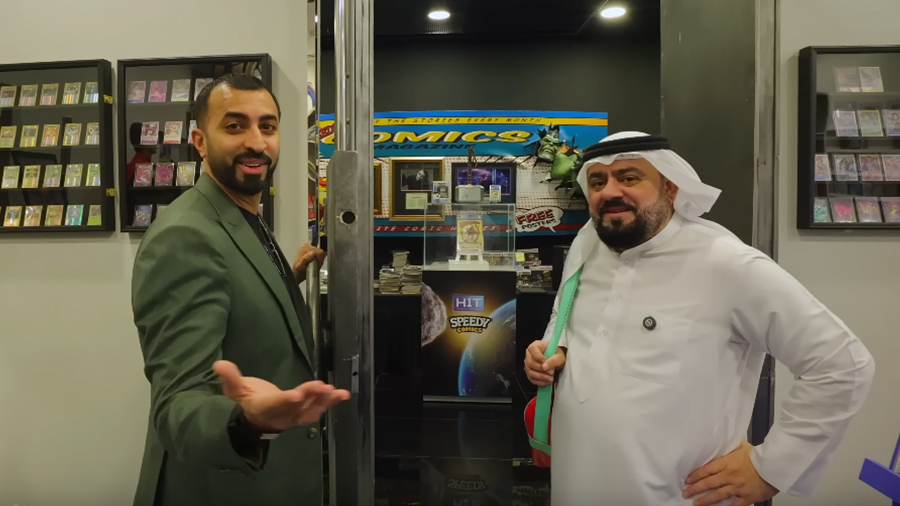
The collection spans comic book history, from Golden Age Batman #3 (1940) to modern rarities. Single pages from 1939 Batman comics command $3,000-4,000, while complete issues reach significantly higher valuations.
Authentication Business Strategy
Speedy Comics ME operates as the region's only homegrown grading service, processing collections in 15 working days for $55—substantially below international competitors. The 10-point grading system dramatically affects values: a 9.8-rated comic in pristine condition can be worth exponentially more than lower-graded copies.
"When you grade a book, it gives authentication that it really is what they say it is," Al Farooq notes. "A $100 raw comic becomes worth $300 when professionally graded."
Investment Philosophy and Market Timing
Al Farooq's strategy centers on anticipating franchise developments. When Marvel sold character rights during the 1980s bankruptcy—Spider-Man to Sony for $2 million, Fantastic Four and X-Men to Fox—he began targeting related first appearances.
"Marvel just bought back everything from Fox. You heard it here first—buy everything Fantastic Four, X-Men, Deadpool you can see," he advises. "I have books I bought for one dollar selling now for 40 dirhams, but if one appears in a movie storyline, boom."
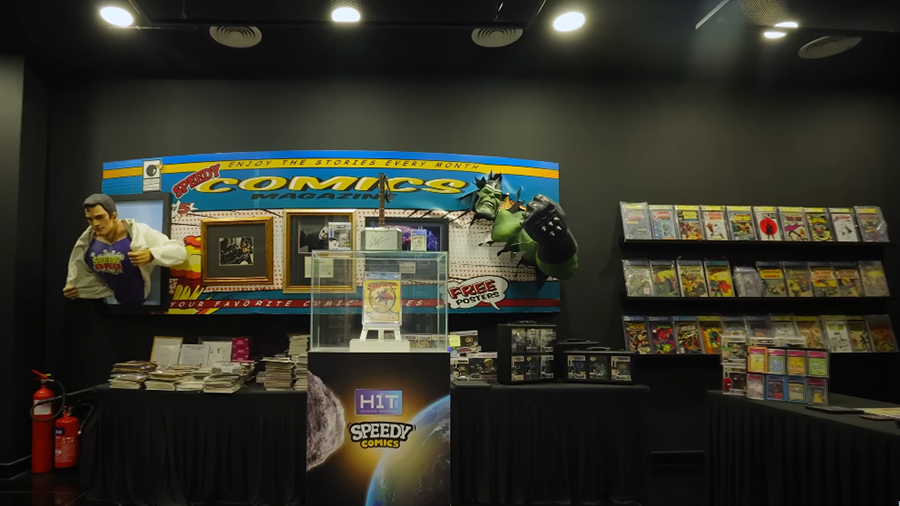
His recent investment example: purchasing books for 2,000 dirhams that returned $10,000 when graded 9.8—a five-fold return in three months. Three of his 15 friends who followed the advice quadrupled their investments.
Cultural Innovation
Through partnership, Al Farooq pioneered Arabic-language comic publishing—the first global arrangement of its kind. The company integrates blockchain authentication technology for verification and accepts cryptocurrency payments.
Collecting Strategy for New Investors
Al Farooq's framework for executive collectors involves two key questions: budget and timeline. For long-term investors, he recommends Golden Age and Silver Age comics with established franchise connections.
"Buy three of everything," he suggests. "One for yourself, one to trade, one for investment. If you're making 10,000 dirhams monthly, invest at least 1,000 in collectibles instead of spending it at restaurants."
His 15-year collecting journey began as a child visiting London's Forbidden Planet, where a £500 comic he couldn't afford now values at $3 million. "I created a new collector today," he says, gifting a signed 1982 comic. "Now you'll call me asking about investing 1,000-3,000 dirhams in something."
Market Performance
Al Farooq describes comics as "the only investment that doesn't go down—this is blue chip." His collection includes creator-signed issues: Bob Kane (Batman creator), Stan Lee (Marvel architect), and Joe Simon (Captain America co-creator, whom Al Farooq credits as Spider-Man's true originator).
The $33 million collection requires specialized storage with climate control and security systems. "It's not about the prices," Al Farooq explains regarding his reluctance to sell key pieces. "It's about getting them again—how are you going to get them?"
For executives entering collectibles markets, Al Farooq's model demonstrates how combining deep market knowledge with systematic acquisition can generate exceptional returns while building culturally significant collections.